
Tag Archive for: sealcoat

When to Decide on Fresh Sealcoat vs Asphalt Repair in Minneapolis?

Your parking lot takes a beating every single year. Minneapolis winters push freeze-thaw cycles through every crack. Summer UV oxidizes the surface. 

De-icing chemicals eat at the binder. At some point, every property manager in the Twin Cities faces the same decision: do we sealcoat, or do we repair?

The answer depends on what’s wrong with the pavement, and choosing the wrong option wastes money. Here’s how to think through it.

How to Tell If Your Parking Lot Needs Sealcoating

Sealcoating is preventive. It protects pavement that’s structurally sound by sealing out moisture, slowing oxidation, and giving the surface a cleaner appearance. If your asphalt is relatively intact but showing surface wear, fading, or minor surface cracks, sealcoating is probably the right call.

On new asphalt, wait 90 days before sealcoating. That gives the surface time to cure and off-gas properly. After that first application, most commercial properties in Minneapolis should reseal every two to three years, depending on traffic volume and exposure.

Timing matters too. Sealcoating needs dry conditions and temps above 50°F. That puts your window from late spring through early fall, which means if you’re reading this in July, you’re in the right season to schedule.

Types of Asphalt Repairs for Commercial Parking Lots

Here’s where a lot of property managers get tripped up. Sealcoat does not fix structural damage. 

TruSeal America offers several repair options depending on the condition of your pavement:

Patching

Best for isolated damage in otherwise stable pavement.

  • Removes damaged asphalt in targeted sections
  • Replaces it with fresh asphalt
  • Cost-effective for small problem areas

Mill and Overlay

Ideal when the surface layer is failing but the base remains solid.

  • Removes the top layer of damaged asphalt
  • Repairs minor underlying issues
  • Adds a fresh asphalt surface
  • Extends pavement life without full replacement

Full Replacement

Needed when the base layer has failed.

  • Removes damaged asphalt layers
  • Rebuilds the base
  • Installs new asphalt
  • Best long-term solution for major structural damage
Men paving asphalt in Eagan, Minnesota

Why Delaying Asphalt Repairs Costs More

Waiting too long to address pavement damage often turns a minor maintenance issue into a major repair expense.

For example:

  • Small cracks can often be sealed for a few hundred dollars
  • Unsealed cracks can become potholes, costing thousands to patch
  • Ignoring potholes can lead to base failure and full replacement

Routine sealcoating every two to three years helps extend pavement life and reduces the risk of expensive structural repairs.

Lees Weather, a TruSeal customer, put it plainly: “Excellent workmanship, products, and attention to detail. This is the second time I have utilized this company’s services, and I would HIGHLY recommend them.”

That kind of repeat business reflects what TruSeal hears consistently: getting ahead of pavement problems costs less and causes less disruption than reacting to them.

Should You Sealcoat or Repair Your Asphalt Parking Lot?

If the surface is faded, lightly cracked, or due for its two-year refresh, schedule sealcoating before fall. 

If you’re seeing potholes, base movement, or widespread cracking patterns, call for a repair assessment first. And if you’re not sure, get eyes on it. A surface that looks worn might still have structural integrity. One that looks passable might be hiding base issues.

Schedule a Free Asphalt Assessment in Minneapolis

TruSeal America serves commercial properties across the Twin Cities with 25 years of experience in sealcoating, asphalt repair, paving, and crack sealing. Get a free estimate and find out exactly what your lot needs.

Asphalt Sealcoating vs Repair FAQs

How do I know if my asphalt needs repair before sealcoating? 

Look for alligator cracking, soft spots, or potholes. These are signs of base failure that sealcoating won’t fix. Minor surface cracks and fading, on the other hand, are ideal candidates for sealcoating.

How often should commercial parking lots in Minneapolis be sealcoated? 

Every two to three years is standard for most commercial properties, though high-traffic lots may need it more frequently. The first application on new asphalt should happen around 90 days after installation.

Can TruSeal handle both sealcoating and repairs in the same project? 

Yes. TruSeal America handles crack sealing, patching, mill and overlay, full replacement, and sealcoating, so repairs and preventive treatment can be scheduled and completed together.

What’s the best time of year to sealcoat in Minneapolis? 

Late spring through early fall. Sealcoat requires dry conditions and air temperatures above 50°F to cure properly.

Does sealcoating prevent potholes? 

It reduces the conditions that cause them. By sealing out moisture, sealcoating limits freeze-thaw damage and slows surface deterioration, which is the main driver of pothole formation in Minnesota.
How Often Should You Sealcoat a Parking Lot?

Your parking lot is the first thing customers, tenants, and visitors see when they arrive at your property. A faded, cracked surface sends the wrong message before anyone walks through the door.

Regular sealcoating is one of the most cost-effective ways to protect your pavement investment and keep your property looking sharp. But how often should you sealcoat a parking lot? Too soon and you waste money. Too late, and the damage is already done. 

Here is a simple answer built around real-world conditions, including the specific punishment that Minnesota winters dish out to commercial pavement.

Sealcoating Schedule Summary

  • Most commercial lots: Every 2–3 years
  • New asphalt: First coat after 90 days
  • Minnesota properties: Often closer to 2 years
  • Best season: Late spring through early fall

How Often to Sealcoat a Commercial Parking Lot

For most commercial parking lots, sealcoating every two to three years is the standard recommendation. That interval allows natural wear while maintaining protection before structural deterioration begins.

For new asphalt, the timeline works a little differently. Fresh pavement needs time to cure and off-gas oils before a sealer can bond properly. TruSeal America recommends waiting approximately 90 days after new asphalt installation before applying the first coat. After that initial application, the standard two-to-three-year cycle applies going forward.

Why Minnesota’s Climate Changes the Math

If your commercial property sits in the Twin Cities or anywhere in the Upper Midwest, the standard timeline is your baseline, not your ceiling. Minnesota’s climate creates a uniquely aggressive environment for asphalt pavement, and the sealcoating schedule for a parking lot in Minneapolis is not the same as one in a milder climate.

Here is what your pavement is up against every single year:

  • Freeze-thaw cycles: Repeated expansion and contraction during winter and spring.
  • Chemical erosion: Road salt and de-icers that penetrate cracks and accelerate decay.
  • UV oxidation: Summer sun exposure that dries out and weakens unprotected asphalt.
  • Thermal stress: Multi-directional strain caused by rapid temperature fluctuations.

Each of these factors accelerates wear. A parking lot in Minneapolis that goes three years without sealcoating has typically endured far more stress than a comparable lot in a warmer, drier climate. That is why TruSeal America evaluates each property individually instead of applying a generic maintenance schedule.

Signs Your Parking Lot Needs Sealcoating Now

You do not always need to count years since the last application. Your pavement will show you when it is ready. Watch for these indicators:

  • Surface color has faded from deep black to a grayish tone
  • Small cracks or hairline fractures are visible across the surface
  • Aggregate (the small stones in the asphalt) is becoming exposed
  • Water is pooling rather than sheeting off the surface
  • The pavement feels rough or brittle underfoot

Any one of these signs indicates a surface that has lost its protective layer and is becoming vulnerable to the kind of water infiltration and freeze-thaw expansion that can turn minor cracks into serious potholes. Catching it at this stage is significantly less expensive than addressing the damage once it has progressed.

What Happens If You Delay Sealcoating

Sealcoating is a preventive service. It works best when it is applied before significant damage occurs, not after. When sealcoating gets delayed, the sequence of events is predictable:

  • Unprotected asphalt oxidizes and becomes brittle
  • Small surface cracks develop and allow water to penetrate
  • Water freezes and expands inside those cracks during Minnesota winters
  • Cracks widen into potholes
  • Potholes require patching or full pavement replacement

For commercial property owners and managers across the Twin Cities, staying on schedule is not just good maintenance practice; it is a smart financial decision.

Best Time of Year to Sealcoat in Minnesota

Timing within the year matters just as much as the interval between applications. Sealcoating requires the right conditions to cure properly and bond effectively to the pavement surface. In Minnesota, that means:

  • Optimal Window: Late spring through early fall.
  • Temperature: Minimum 50°F and rising during application.
  • Weather: Dry surface with no rain for at least 24 hours.
  • Sun Intensity: Avoid direct midday sun on extremely hot days to ensure proper curing.

TruSeal America schedules commercial sealcoating projects carefully around these conditions, which is why timing your consultation ahead of the season gives you the most flexibility in scheduling.

Sealcoating and Striping Go Together

One often overlooked benefit of a fresh sealcoating application is the opportunity to re-stripe your parking lot at the same time. The newly sealed surface provides an ideal bonding surface for parking lot paint, resulting in crisper, more durable lines than you can achieve on an aged or weathered surface.

For commercial properties, clear and visible striping is not just cosmetic. It manages traffic flow, maximizes parking capacity, maintains ADA compliance, and reduces liability. Combining sealcoating and striping in a single scheduled service minimizes disruption to your operations and gets the most out of both applications.

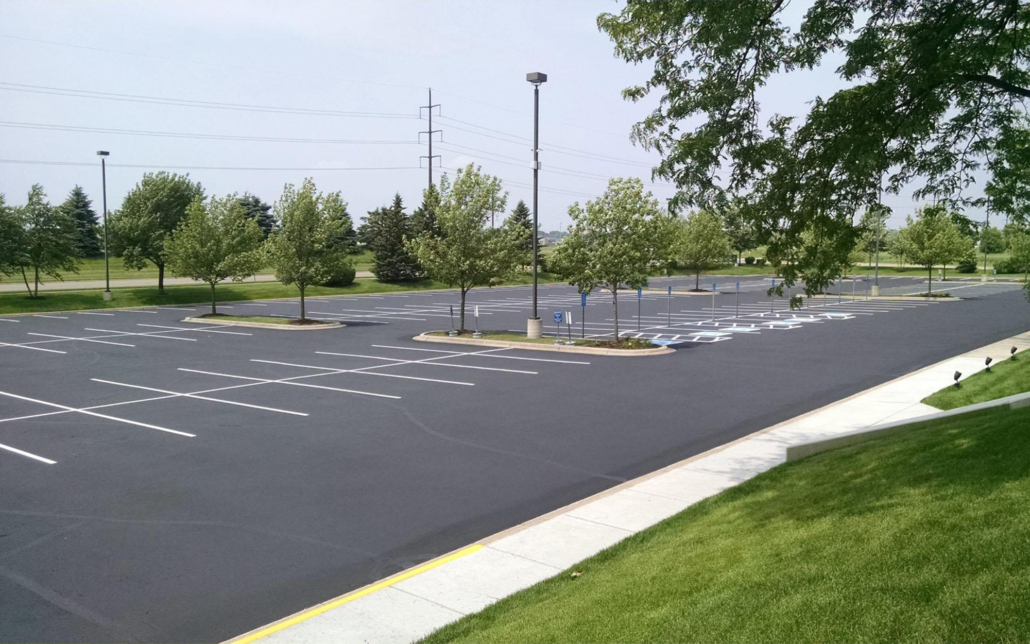
Side View Of Parking Lot in Apple Valley, Minnesota

How TruSeal America Approaches Commercial Sealcoating

TruSeal America has 25 years of experience delivering commercial sealcoating across the Twin Cities and surrounding areas. The team works with commercial properties of all sizes, from small retail lots to large multi-use facilities, developing personalized strategies based on the demands of each property.

TruSeal uses specialized blends tailored for Minnesota’s freeze-thaw cycles, incorporates crack sealing as part of a comprehensive surface protection strategy, and carefully schedules projects to minimize disruption to daily operations. 

Their work for a FedEx branch, sealcoating all parking lots and loading areas while keeping trucking and logistics operations fully functional throughout, is a good example of how they approach large-scale commercial projects.

As Angela Bell, a longtime TruSeal client working with community associations, put it: “They do excellent work and provide great customer service and communication regardless of the job size.”

Protect Your Pavement Before Winter Wins

For commercial property owners and managers across the Twin Cities, staying ahead of pavement maintenance is always less expensive than catching up after the damage is done. 

Regular, timely sealcoating is the most cost-effective way to protect your Minnesota property investment. Spring and early summer schedules fill quickly. Contact TruSeal America today for a free estimate and secure your spot before peak season demand limits availability.

Frequently Asked Questions

Can I sealcoat a parking lot that already has cracks? 

Cracks should be filled and sealed before sealcoating is applied. Applying sealer over unaddressed cracks traps moisture and does not stop the underlying damage. TruSeal America incorporates crack sealing into the overall pavement maintenance process so the sealcoating application performs as intended.

How long does a freshly sealcoated parking lot need to dry before it can be used? 

Most commercial sealcoating applications require the lot to remain closed for 24 to 48 hours, depending on temperature, humidity, and the specific sealer blend used. TruSeal America coordinates project scheduling with clients to minimize operational disruption during the curing period.

Does sealcoating work on concrete parking lots? 

Sealcoating, as described here, applies specifically to asphalt pavement. Concrete surfaces require different treatment and protective products. TruSeal America works with both asphalt and concrete and can recommend the right approach based on your specific surface.

What if my parking lot has not been sealcoated in many years? 

A professional inspection is the best starting point. Depending on the current condition of the surface, the recommendation may range from a straightforward sealcoating application to crack filling first, or in some cases, pavement patching before any sealer is applied. TruSeal America offers free estimates and will give you an honest assessment of where your pavement stands.